
Author: Jaka Bombač.
The Beyond Fronta Critics’ Residency program gave me the chance to get acquainted with other performance art critics as well as with different institutional and production contexts. It also included a very wide range of diverse performances, ranging from improvisation to dance theatre, from avant-garde to interdisciplinary to immersive.
It started with our residency in Celje and with the workshop led by Pia Brezavšček and Ana Fazekaš, in which we were introduced to the topic of dance history and to various philosophical and critical perspectives. The workshop was extensive, but not one-dimensional, since it was thematically and methodologically (or pedagogically) diverse. It included various different formats of learning and encouraged us to use various critical perspectives not only on individual performances but also on the historical dance discourse. We also had enough freedom to discuss our own approaches to art critique, which opened up several interesting discussions about the broader position of the critic within society – for instance, how to understand the relation between the subjective and the objective and the relation between the aesthetic and the political.
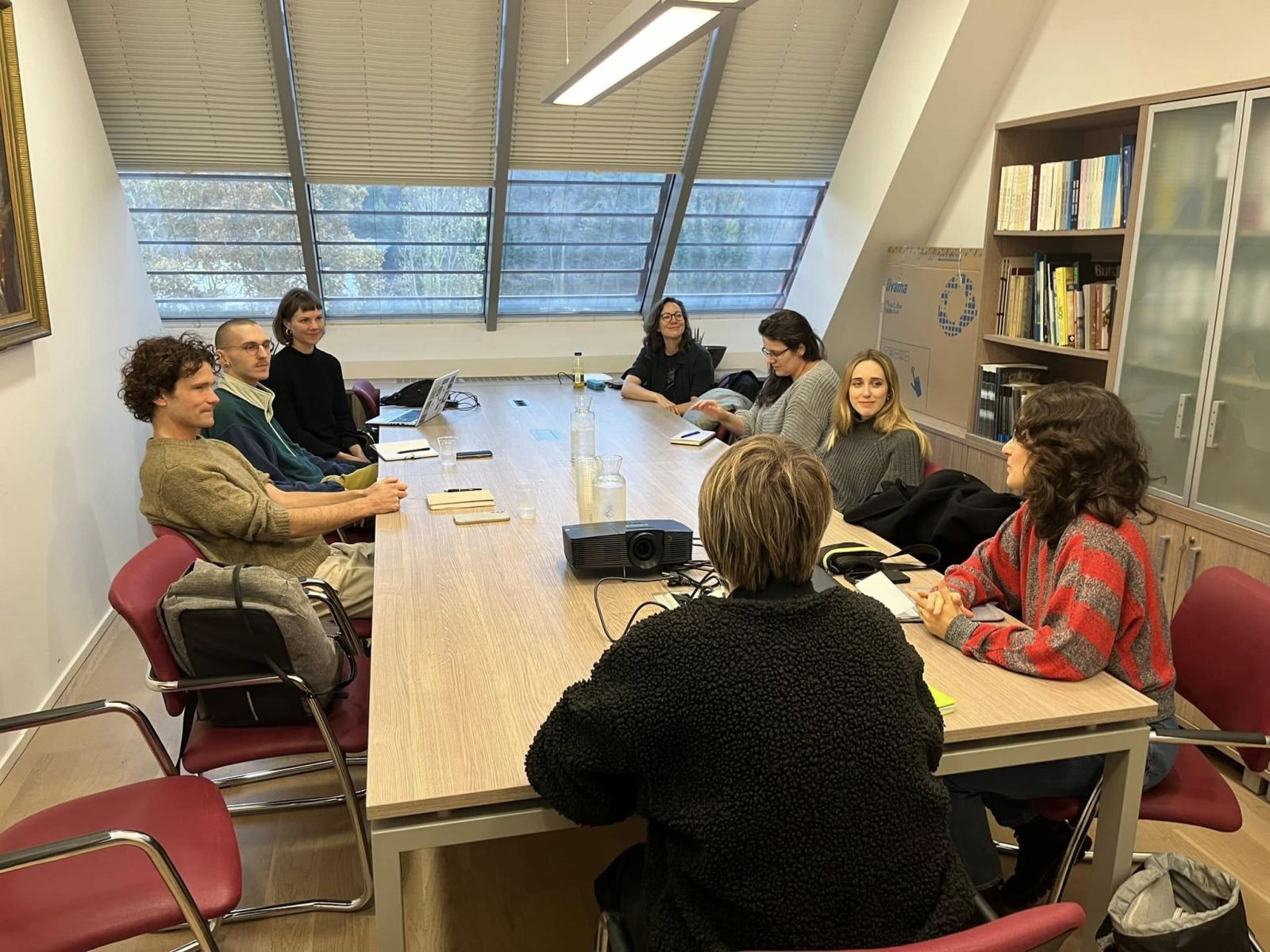 Dance Critics Residency – Drugajanje Festival – Celje, Slovenia – 11–15 Nov 2024
In this first week, we also had a lot of time to socialize and get acquainted with each other on a professional as well as personal level. It was interesting to see that we are all coming from very diverse backgrounds. Not only regarding our home countries, but also regarding our interests: some from theatre and literary, others dance critique, some dancers themselves, some interested in broader philosophical or social issues. The class therefore gave us space to reflect on our own positions as critics: what are our own presuppositions about what we are even trying to do? What do we even expect to see when going to see a »performance« or a »dance performance«?
For me, it was very important to be able to see different performance sites in different institutional contexts. This got me wondering, for instance, how Sweden, geographically a very big country with 4 bigger dance ensembles, has a different infrastructure than Slovenia, a small country with only 1 dance ensemble and most of its art production centred in the capital. This makes for Slovenia’s highly heterogenous (and hyperproducing) art scene: the centralization in a smaller area seems to support the ‘migration’ of aesthetics, concepts and procedures between various performance art fields and formats.
One of the topics that interested me in my essays was precisely decentralization (in short reports from HERE and Drugajanje festivals). Decentralization can refer to the decentralization of art production or art display, but also to certain trends in performance art theory (like the decentralization of experience in ‘immersive’ performances such as Guerilla). The other topic was nature, with which I dealt in my report from Krakow, where I saw Maciej Kuźmiński’s dance performance titled The four seasons. This performance seemed in a way like a live painting, since it used representational movements and all the details were choreographed, even if some of the dancers were not technically developed enough to be able to interiorize the choreography and ‘make it their own’.
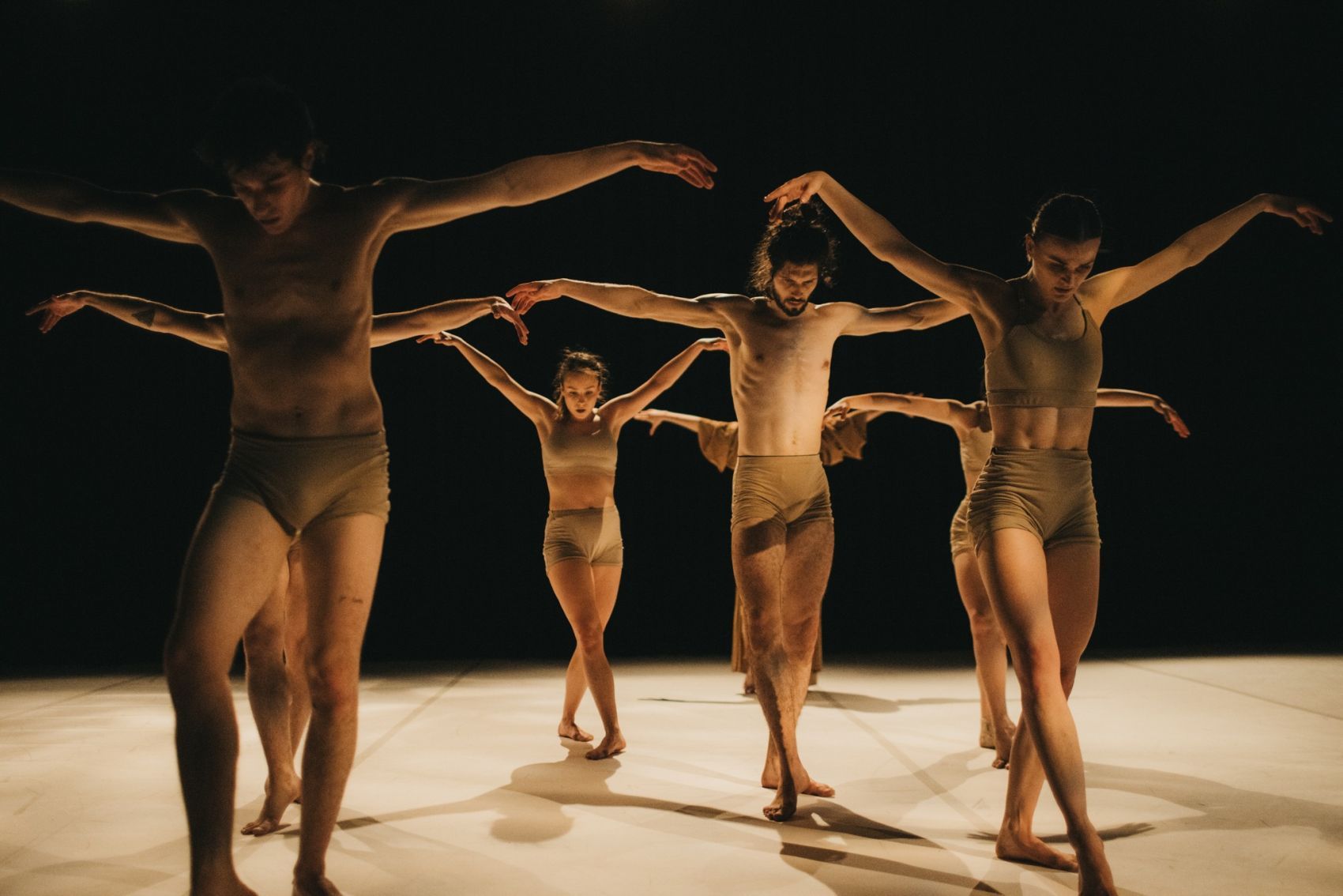 Central Europe Dance Theatre – Four Seasons by Maciej Kuźmiński. Photo by Grzesiek Mart.
The performance reminded me of the long tradition of nature depiction in classical music and classical painting. Two important questions arose: Why do these classical depictions of nature seem problematic in an ecological age (or the sc. ‘anthropocene’)? And why does nature depiction seem more problematic in dance than in music and painting? I would guess that while painting is typically representative and music is typically abstract, dance deals with the body, which itself is of nature; therefore, representation of nature’s rhythms and flows by bodies in which these inevitably take place, seems like a redoublement; furthermore, the vitalist discourse in dance portrays dance as something that the body can ‘get lost in’; vital energy, elan vital, which seems, at least in a non-reflected form, to imply essentialization of nature.
I really liked the overall organization of the Critics’ residency programs. At first, we got equipped with several concepts and encouraged to think about the position of the critic in general as well as notice the different contexts that shaped us as individual critics. Seeing the similarities and differences between us (throughout all of the festivals, where we spent a lot of time with each other), we could better understand how to use the concepts within our own critical perspective. This really helped to shape my general thought on what criticism even means in today’s performance art and society in general. The premieres that happened at various festivals were highly diverse: from a very modernistic performance, based on avant-garde notations (Milan Tomašik’s Treatise), to a representational performance (Kuźmiński’s Four seasons); from a structured improvisation (Francesco Scavetta’s Nowhere like here) to dance theatre (Eryk Makohon’s Dirty Dancing) and immersive performance (Guerilla).
Being introduced to different points of view, different institutional contexts as well as to different aesthetics was a very valuable experience. I met many interesting writers, dramaturges and critics with whom I will keep in touch or even collaborate in the future. As critics, our work is often fragmented between many smaller projects; but the Beyond Fronta Critics’ residency offered me a chance to keep some sort of continuity – of themes, conversations, people – and this certainly allowed for the development of my critical apparatus. I would like to thank all of the organizers, the artists and the critics for making it possible for us to work in a good working enviroment and develop our skills.
Jaka Bombač’s critical reviews created within the Beyond Front@: Bridging Periphery project:

