
Author: Nora Čulić Matošić.
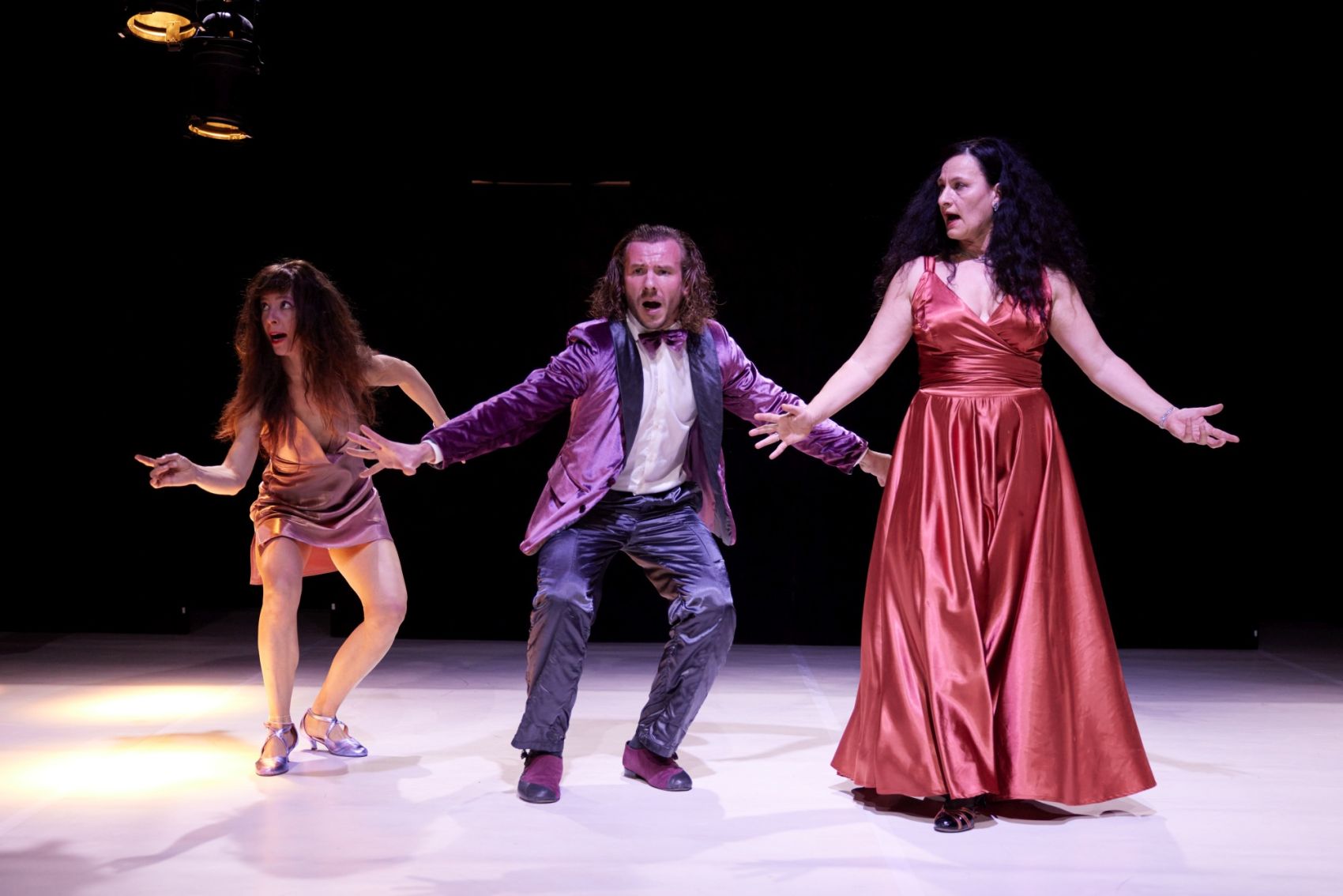
Devised and directed by Eryk Makohon, Dirty Dancing was my favourite show from the latest edition of Sissi Dance Week in Budapest. Unfortunately, it was the only time I saw it, unlike other performances I wrote about as part of the dance critics residency. Therefore, looking back to some of my poorly scribbled notes (a critic’s curse), this review won’t be as detailed as other ones in description, but in the case of this performance, doesn’t matter as such as did my emotional response to the piece. Out of all the performance I got to see featured on different dance festivals (Zagreb’s Dance Week, Slovenia’s Drugajanje and finally, Sissi in Budapest), this was the most amusing one which personally I missed from the programmes. I remember laughing and giggling so hard during it, tears started running down my face. The ensemble consists of four dancers from the Romanian Studio M: Zoltán Deák, Eszter Nagy, Emília Polgár and László Szekrényes. All four of them present a distinct character, which is apparent from the beginning mostly due to their elaborate outfits. Both Deák and Szekrényes are dressed in glossy silk suits, Deák in plum-purple one complemented with a bow-tie and Szekrényes in a brown one. The two of them look rather odd and a bit goofy in those suits, like their characters didn’t actually pick them themselves, but they look like they are attending a prom night. Polgár alternates between two long dresses, red and black one that give her a more dignified and mature look unlike her female colleague.
 Dirty Dancing by M Studio (chor. Eryk Makohon) – Budapest, Hungary – 16 Nov 2025. Photo by Gábor Dusa
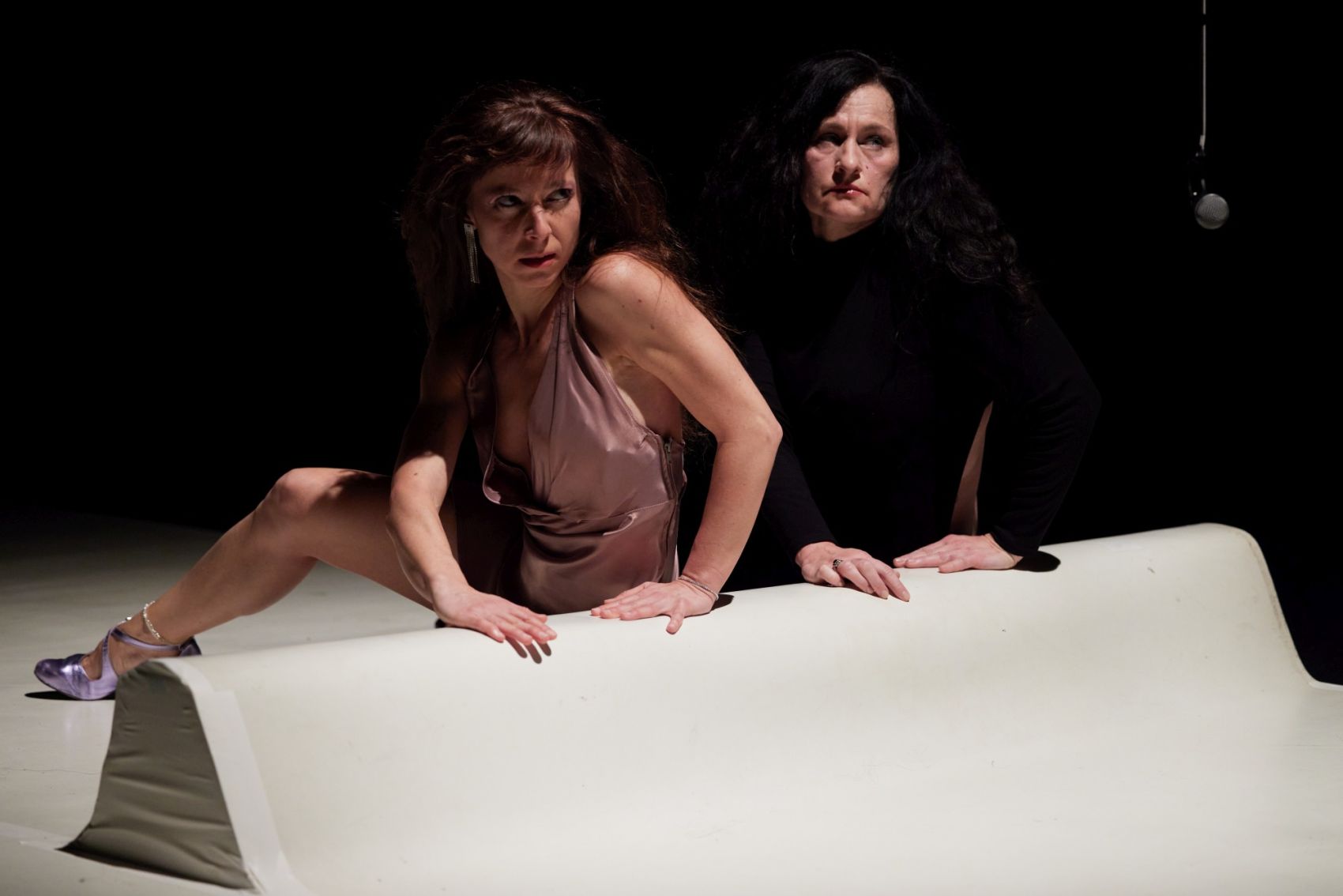
Nagy is dressed in a short nude pink dress accompanied with striking shimmery purple flats. Her outfit sort of reminds me of Baby, the lead female character in the film Dirty Dancing, the dress she wore during the last scene, the iconic dance number I’ve Had the Time of My Life by Jennifer Grey and Patrick Swayze. The stage design (also by Makohon) is very minimal: there are three headlights in the back corners and two microphones hanging from the ceiling. In the front corner, there’s a white bulge that makes it seem like the white linoleum floor wasn’t adequately taped. As soon as the audience settles down in their seats, the lights suddenly turn off and heavy metal plays from the speakers, followed by strobe lights. All four dancers are dancing wildly on the stage, in the rhythm of the music, each from themselves, until the lights are quickly turned off again.
 Dirty Dancing by M Studio (chor. Eryk Makohon) – Budapest, Hungary – 16 Nov 2025. Photo by Gábor Dusa
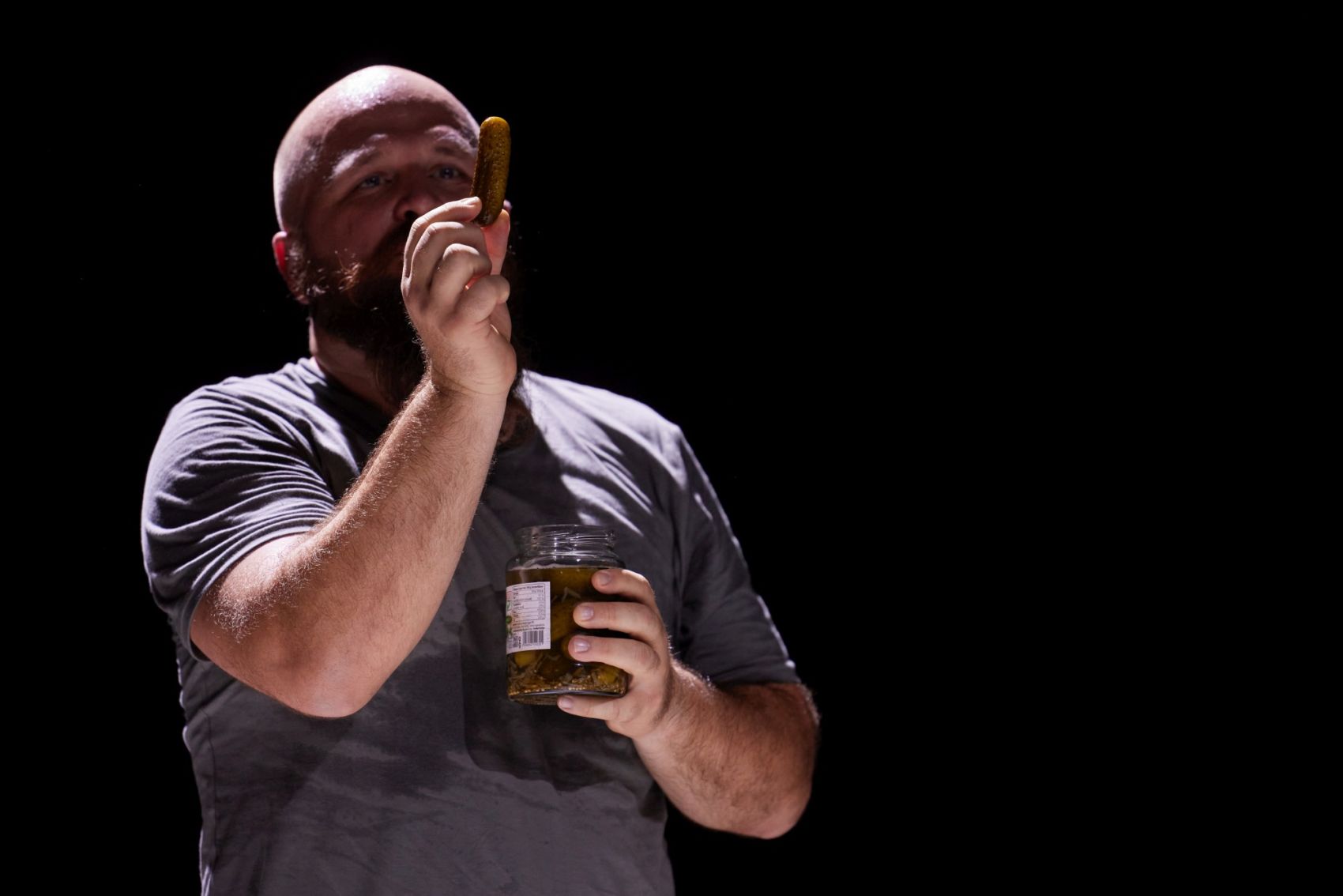
A quick change in music follows with an opera number now playing and the dancers are sitting on the before-mentioned ‘bulge’, watching in the distance, like they are watching the opera right now. Gradually, they become more and more emotional which is visible on their faces that are over the top and hysterical. They are trying to stop themselves from crying which is entertaining, especially Szekrényes who twirls his beard like women would their hair. The comedy of the piece mostly comes from the dancers pulling funny faces and physical, slapstick like gags which adds more to the ‘theatrical’ aspect of the piece. Particularly with Nagy’s performance who pretty much dominates the performance with her long monologues. She speaks directly to the audience and tells us that she’s the main star of tonight’s show and talks about herself as the mystery girl with a ‘Mona Lisa smile’. She continues to talk about her muscles and body, giving the performance a layer of metafiction and self-irony. My personal favourite from her monologues and the performance as a whole, was her analogy how life is like a jar of pickles and seeing fermentation as a metaphor to life – once you become a pickle, you cannot go back to being a cucumber and that making a choice between the two is critical. She continues this tirade by calling someone from the audience a pickle and then switching to quoting Kierkegaard’s work Either/Or, taking on a pseudo-intellectual persona that speaks with a thick British accent.
 Dirty Dancing by M Studio (chor. Eryk Makohon) – Budapest, Hungary – 16 Nov 2025. Photo by Gábor Dusa
While she’s busy with her pickle monologue, Deák and Szekrényes are fighting over a jar of pickles Szekrényes brought on stage and tried to open it turned away from the audience, which looked like he was pleasuring himself. The interaction escalates when Deák start throwing the pickles to audience members that wanted to eat them, while Szekrényes was juggling with them in the air. Nagy continues her meta-self-ironic monologue by hysterically talking about what her body has gone through, that she has no self-worth or dignity since she started working as an artist – but is still trying that hard to prove herself, so she demonstrates her flexibility and calls herself phoenix in a heightened mood. Unlike her co-star, Polgár takes on a more poignant role – she often distant from the others and mostly performs solos which aren’t humorous as the other three. Both of her solos are based around spinning, either herself or the headlights.
 Dirty Dancing by M Studio (chor. Eryk Makohon) – Budapest, Hungary – 16 Nov 2025. Photo by Gábor Dusa
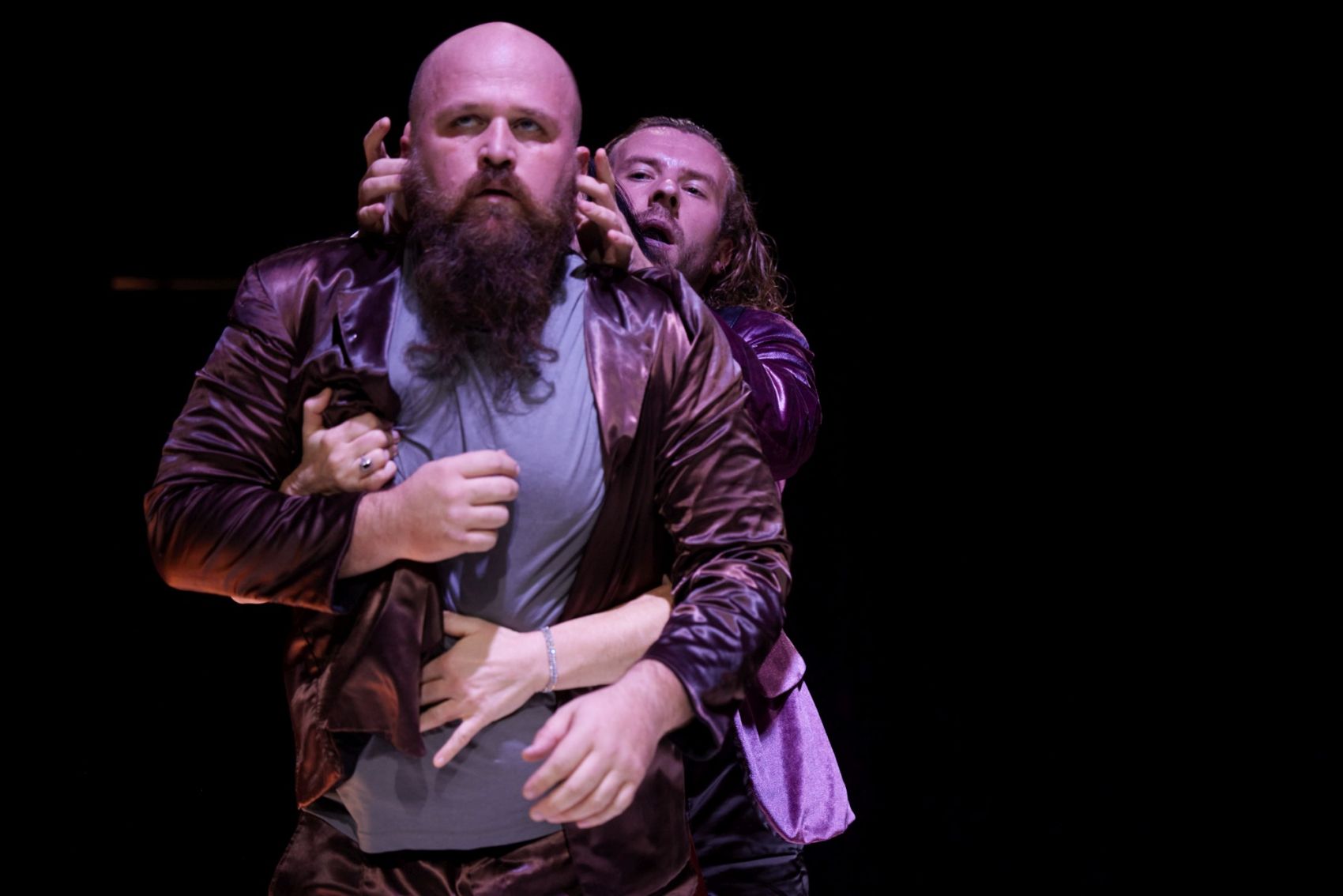
Movement wise, because of its ‘theatrical’ nature, the dance itself falls to the other plan. The ‘dirty dancing’ here isn’t like the one from the film but more ironic, parody like, even though the authors state in the description of the play that it is not a reinterpretation. Because of its pop-culture significance, it’s pretty difficult not to search for references and associations. However, the four characters and dancers don’t replicate the original ‘cast’ but give a sincerer, more human vision of the film. Like with their counterweight manoeuvres, especially when performed by two men, they might look funny because of sexual connotations, but are at the same time very skilfully executed. Another point made in the show’s description is the conducted study of ‘awkward performances’ and its political potential of resistance to social norms. This is definitely present in the piece, as I’ve already mentioned the seeming clumsiness the performers display in seducing each other. However, the political potential sort of falls back behind the comedic sexual and sensual movement that brings to the front more the questions of boundaries and sexual pleasure.
This text was written by Nora Čulić Matošić within the framework of the Beyond Front@: Bridging Periphery project.

