
Author: Emese Kovács.
As one of the dance critic stipend holders of the Beyond Front@ project from November 2024 to November 2025 I attended a total of four dance festivals and individual premiere performances in four of the partner countries: Slovenia, Poland, Hungary and Croatia. For any critic, such extensive travel and the equally rare oppurtinity to gain direct insight into the dance scenes of neighbouring countries made this fellowship a uniquely meaningful and invaluable professional experience.
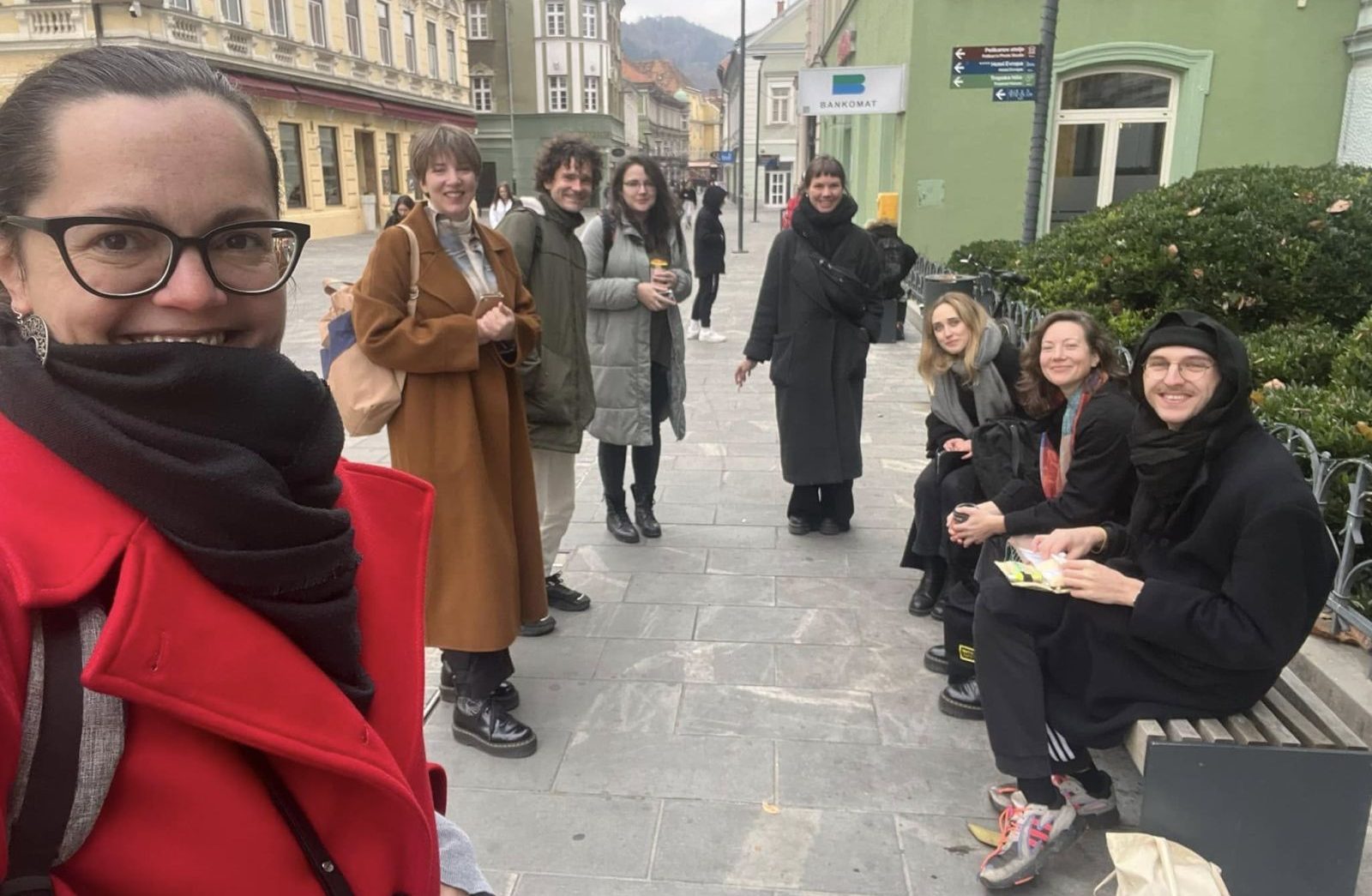 Dance Critics Residency – Drugajanje Festival – Celje, Slovenia – 11–15 Nov 2024
The programme unquestionably contributed to my professional development − more specifically, it enabled my return to the field of dance criticism. Although I had previously worked as a critic, I gradually moved toward the practical side of dance, where I gained considerable experience over the years. At times I became aware of gaps in my theoretical background, yet the programme placed me in a supportive, growth-focused environment that encouraged me to rediscover this field and continue cultivating it with renewed confidence.
Everything began in November 2024, when I participated in a critics’ workshop in Celje, Slovenia, held alongside the Drugajanje Festival. The five-day workshop was led by mentors Pia Brezavšček and Ana Fazekaš. From one, we learned to embrace the boundless freedom and artistic potential of critical writing; from the other, we absorbed the virtues of precision and thoroughness. One of the project’s greatest benefits was the extensive reading list, methodological insights and collection of resources they shared with us − materials that have continued to shape my work ever since. Since then, I have read, watched or acquired several of these references.
Although the workshop was intellectually demanding, our mentors treated us as partners. They were genuinely curious about us and open to our various approaches. It was a major advantage that we could connect with them informally as well, through post-lecture and post-performance discussions. Pia subsequently undertook a careful, detailed editing of our texts later, from which I gained a great deal of practical and enduring advice about critical writing. The organisation was equally professional: we were kept well-informed at all times, and project manager Tamara Bračič Vidmar fulfilled every organisational need − from driving us between venues to translating a Slovenian-language performance, to making sure we had meals, and later helping us navigate the entire programme year. When she was able, she connected us with the right people and kept track of every practical matter.
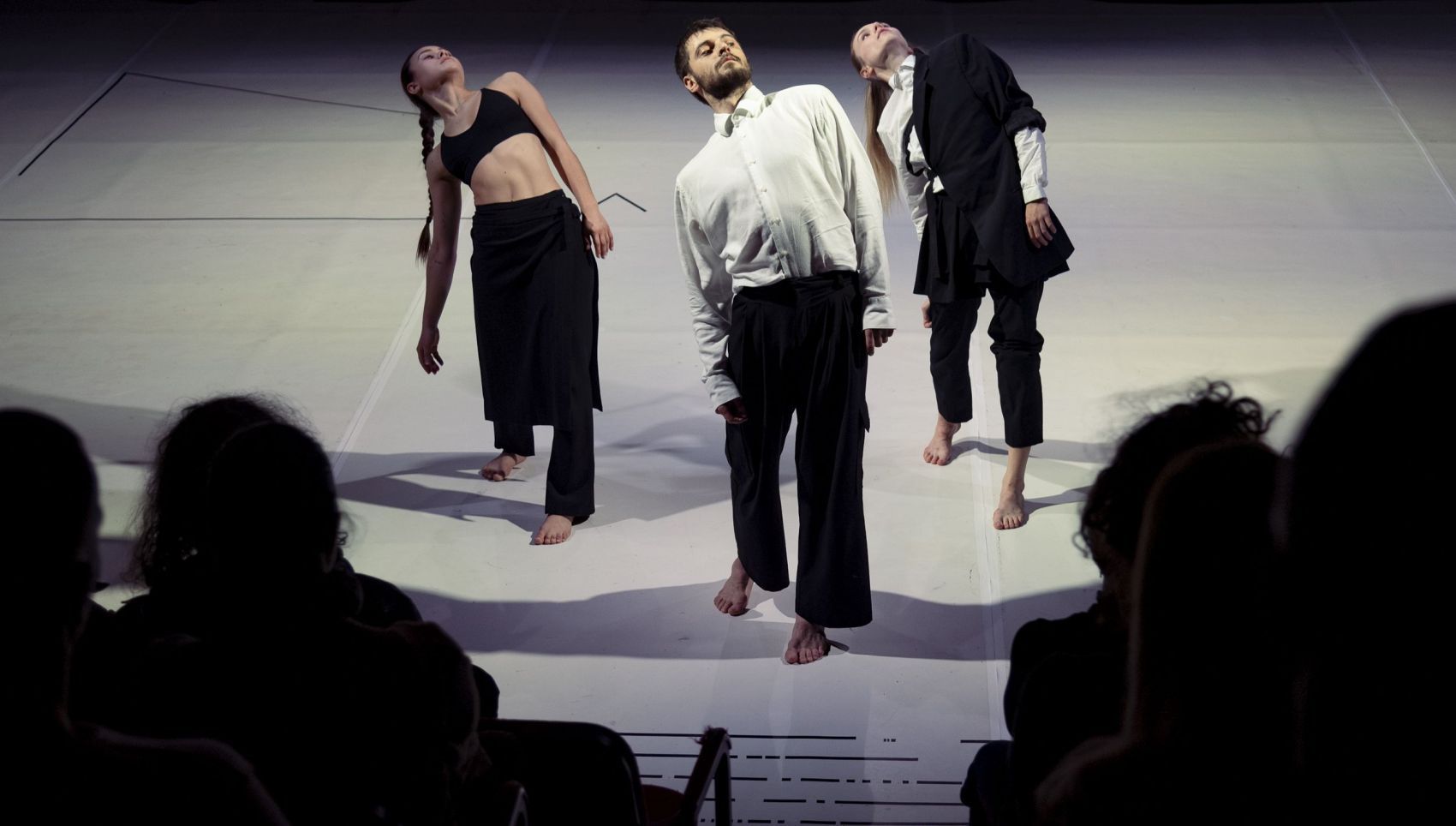 Treatise by Krakow Dance Theatre (chor. Milan Tomášik) – Budapest, Hungary – 16 Nov 2024. Photo by Milán Kovács.
The first event I attended independently was the 2024 Sissi Autumn Dance Week, known for its diverse and carefully curated line-up. During the festival, I wrote about the Krakow Dance Theatre’s Treatise. I particularly appreciated the post-show artist talks, which took place in a truly welcoming atmosphere, as well as the skilful coordination provided by the Hungarian organiser, Andrea Medvegy. I also received informal support from choreographer Márta Ladjánszki, who − despite not being directly connected to the festival that year − kindly introduced me to several international artists she knew. She continued playing this bridging role the following year as well.
In February 2025, I travelled to Kraków to attend the Central European Dance Theatre’s premiere of Four Seasons, which I also reviewed. One major advantage of the Beyond Front@ programme was the chance to see the same performance multiple times, follow its evolution across different stages and contexts, and to reflect on it in depth. As a result, I saw Four Seasons a total of four times.
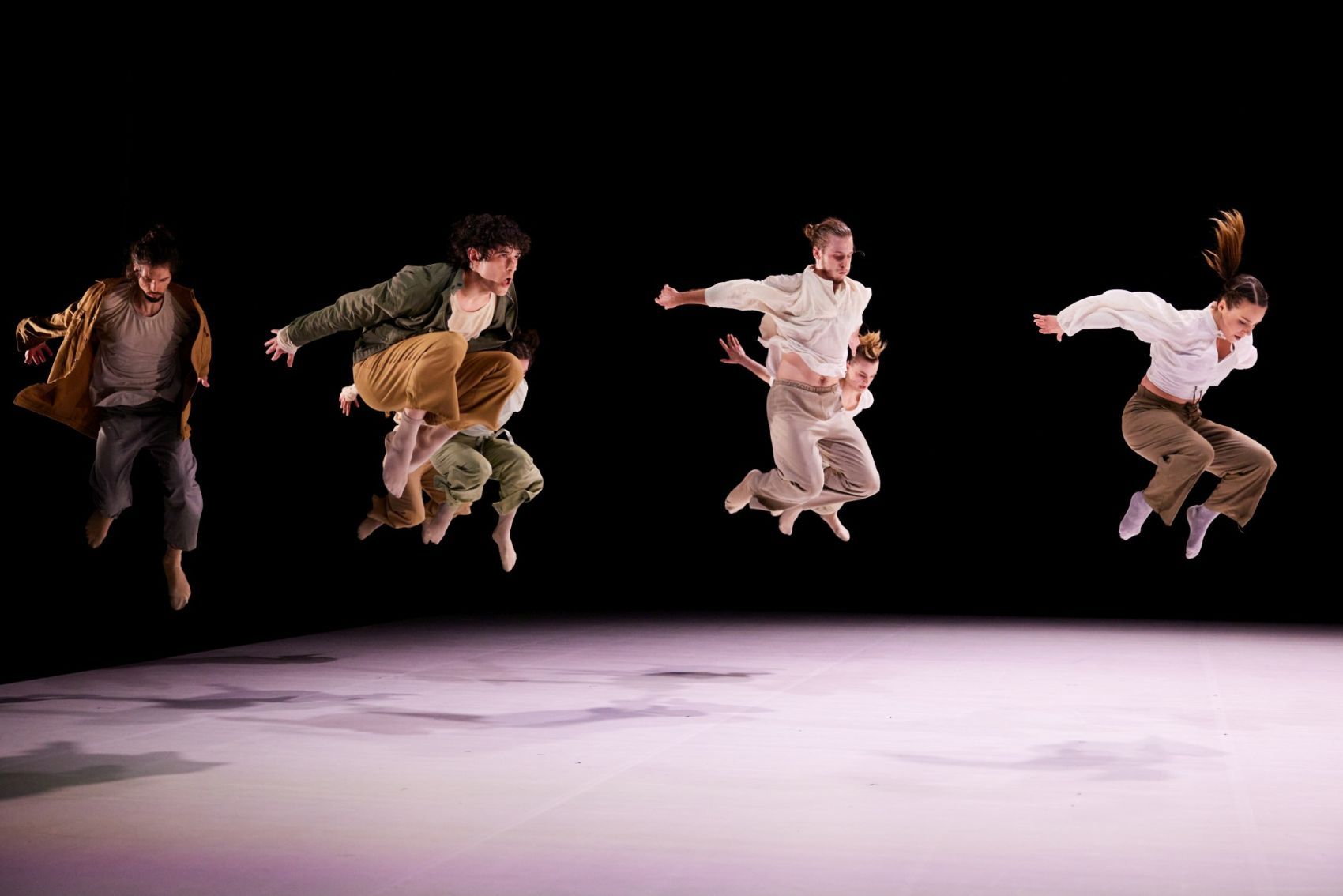 Four Seasons – CEDT (chor. Maciej Kuźmiński) – Budapest, Hungary – 24 Apr 2025. Photo by Gábor Dusa
Later, in Ljubljana, I participated in the Beyond School programme series. At first, I found it difficult to situate myself among the student dance groups − partly because I knew few people, and partly because there were no real social activities for external participants outside the school showcases. I’m not the type to easily strike up random conversations, but fortunately Tamara introduced me to my Croatian fellow, Nora Čulić Matošić. Thanks to the shared programme stages that followed, we eventually became friends, and similarly warm connections developed with fellow stipend holders, Ingeborg Zackariassen and Jaka Bombač as well. The student showcases in Ljubljana offered several genuinely compelling moments; I wrote about them in greater detail in my report.
My final destination was the Dance Week Festival in Zagreb. Of all the events I attended, this was my favourite both for the richness and high quality of its programme (performances, work-in-progress showings, movement workshops, talks, after-show parties, communal dinners) and for the friendly, open, genuinely social atmosphere. Although I missed having direct contact with the festival organizers, by this point we already knew several people in the scene, which made networking easier. I had the chance to meet and speak with both local and visiting dancers, gaining deeper insight into the local context and working methods. The festival also coincided with another major international event, Moving Balkans, which further broadened the opportunities for professional encounters.
One criticism I would raise about the overall programme concerns the limited presence of informal social gatherings or facilitated introductions (for example the after-show party environment in Zagreb really helped a lot). While such accessible networking opportunities did exist, they remained rather limited, and at times it was unclear whether they were intended for us as well; we were not always explicitly integrated into these moments as critics.
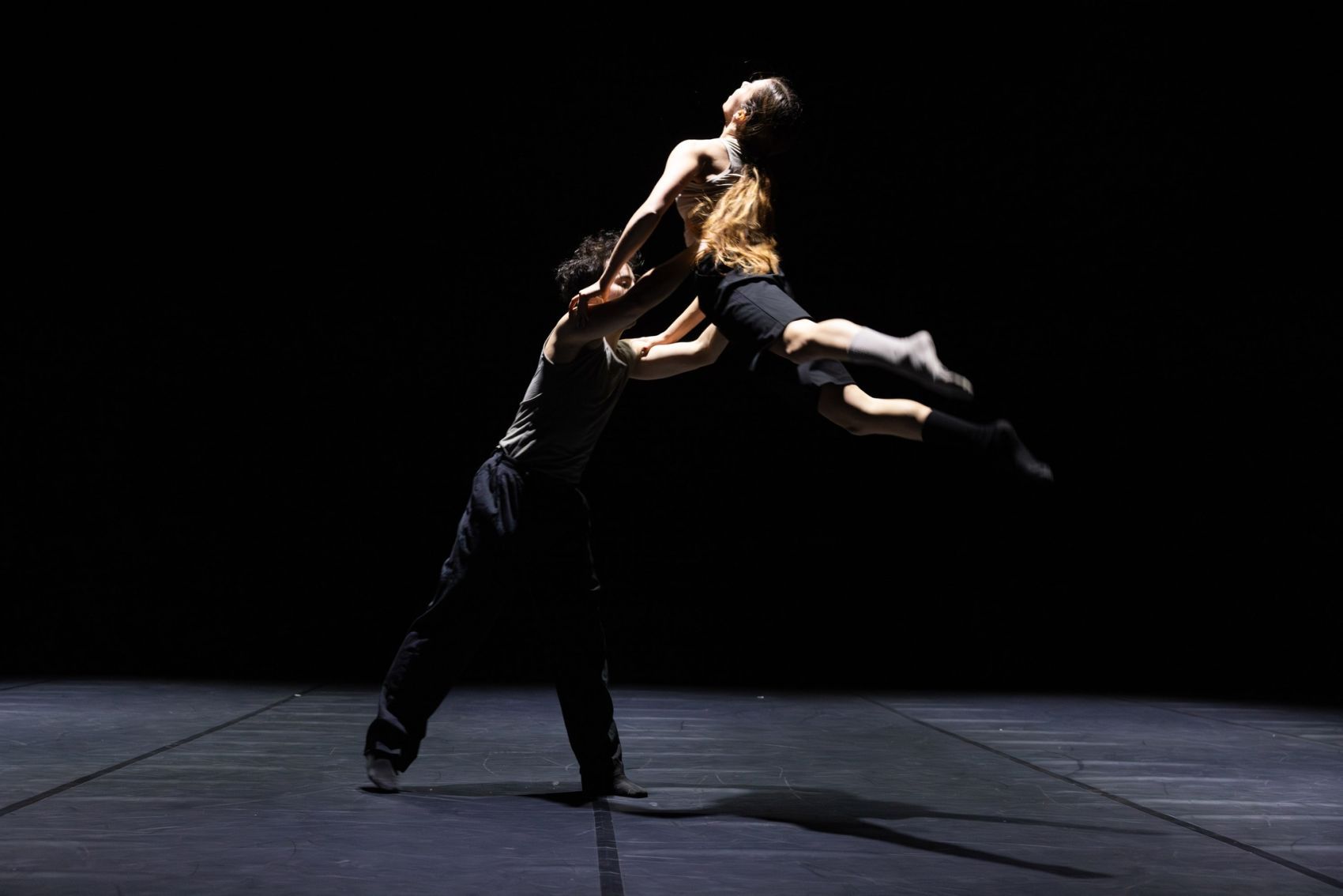 What if… by Hungarian Dance University – Beyond School event – Ljubljana, Slovenia – 19 March 2025. Photo by Nada Žgank
Another aspect that might merit reconsideration is the selection of fellows. I observed − not only in myself, though I stayed committed to my original plan − that several participants struggled to align the often week-long international travel with their everyday responsibilities, which at times resulted in cancellations or last-minute changes. Younger participants, particularly university students or recent graduates, might find it easier to fully commit to such a schedule. This also relates to another challenge: both my own work and that of fellow participants tended to take more time to complete than ideal, which occasionally affected the immediacy and relevance of our texts.
Financially, the programme provided sufficient support − especially because one of my selected events took place in Budapest. We were also usually offered affordable accommodation options, and meals were generally inexpensive.
In summary, I had the privilege of taking part in a rich and rewarding programme that offered a broad perspective on the region’s dance landscape and enabled me to build numerous new professional friendships. The fellowship undoubtedly reaffirmed for me that writing about dance matters − and that this is a path worth pursuing.
Emese Kovács’s critical reviews created within the Beyond Front@: Bridging Periphery project:
- “Contemporary dance is too free”
- Four Seasons, four times — CEDT / Maciej Kuźmiński — Four Seasons
- A refreshing cavalcade / Dance Week Festival in Zagreb
- Weird to be a critic / report on the Beyond School program, Ljubljana

