
Author: Kata Demeter.
Milan Tomášik’s Treatise, choreographed for the Krakow Dance Theatre, invites the audience on a dynamic exploration of the intersection between visual art, music, and movement. Drawing inspiration from Cornelius Cardew’s graphic score of the same name from the 1960’s, the performance translates abstract symbols and geometric shapes into dynamic music and choreography.
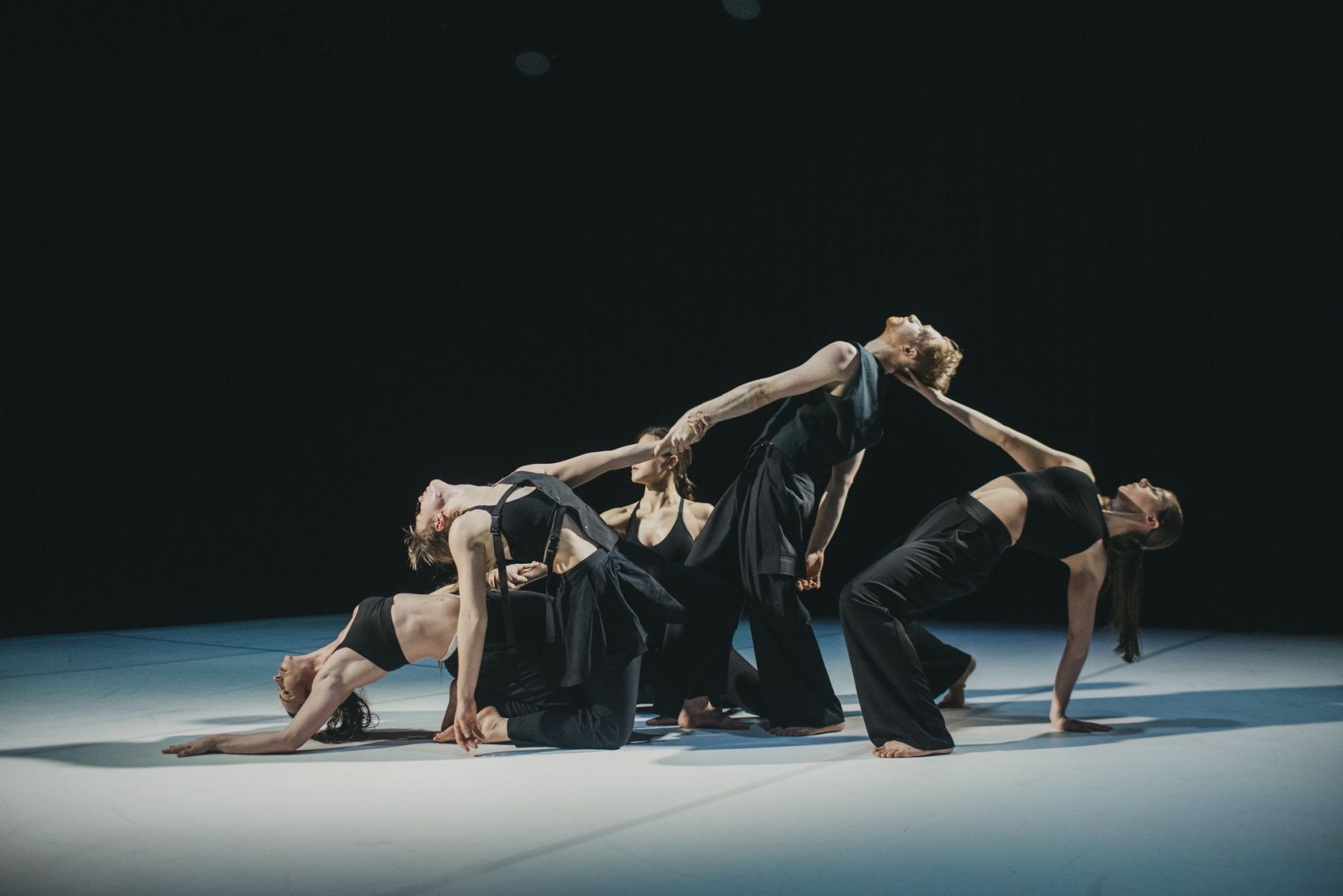
Krakow Dance Theatre – Treatise by Milan Tomášik. Photo by Grzesiek Mart.
The performances music, Piotr Peszat’s composition, also based on Cardew’s graphic score, presents a unique approach to “translating” the work into music. While rooted in the original notations, Peszat’s interpretation remains deeply personal, reflecting the open-ended nature of Cardew’s instructions. His score is characterized by an experimental soundscape, truly contemporary in blending electronic and acoustic elements with fragmented pulses and unexpected accents. The absence of a steady rhythm and the strategic use of silence heighten tension, reinforcing the improvisational nature of the piece. This approach opens itself up for countless variations, aligning with the composer’s intention of leaving the performance open to interpretation.
Peszat’s music alone would be a deeply immersive and captivating experience, drawing the audience into its rich, intricate soundscapes, yet Tomášik elevates the performance further through an innovative approach by introducing a bold and imaginative dimension: he breathes life into static imagery through the dancers’ bodies, this way transforming the piece into a dynamic interplay between sound and movement. Originally conceived as a guide for musicians, Treatise is reimagined here in a strikingly original way, as the dancers translate visual symbols into choreography. At times, their movements seamlessly align with Peszat’s music, creating a harmonious fusion of sound and motion; at other times, they playfully diverge from it, generating tension and contrast that adds depth and unpredictability to the performance. The dancers’ playful performance mirrors the lines, curves, and shapes of Cardew’s notation, effectively bringing the drawings to life on stage. They achieve this by translating the visual elements into movement, responding to the density, direction, and energy of the notational symbols. Sharp, angular marks may be reflected in sudden, staccato gestures, while flowing curves inspire smooth, continuous motions. At times, the dancers follow the notation in a literal sense, tracing its forms with their bodies, while in other moments, they interpret the imagery more abstractly, using spatial dynamics and shifts in tempo to embody the expressive qualities of the score. This dynamic interplay between movement and visual cues transforms the stage into a living canvas, where the notation is not just represented but physically experienced.
This way, instead of Cardew’s original drawings, the audience witnesses a new visual manifestation on stage, a dynamic embodiment of the score. The minimalist set and costume design further accentuate the focus on movement and form: the stark contrast of the dancers’ bodies and their dark clothes against the white ballet floor parallels the imagery of ink on paper, creating a visual metaphor, which engages both the mind and the senses as the dancers translate the score’s abstract symbols into movement, inviting the audience to decode their gestures while simultaneously feeling their impact. The interplay of sharp, precise motions and fluid, expansive sequences create a rhythm that oscillates between urgency and contemplation, tension and release. The lighting design complements this aesthetic, casting shadows and highlights that mimic the contrasts found in the original graphic score. This deliberate staging choice emphasizes the dancers as living extensions of the artwork, blurring the line between the visual and performing arts.
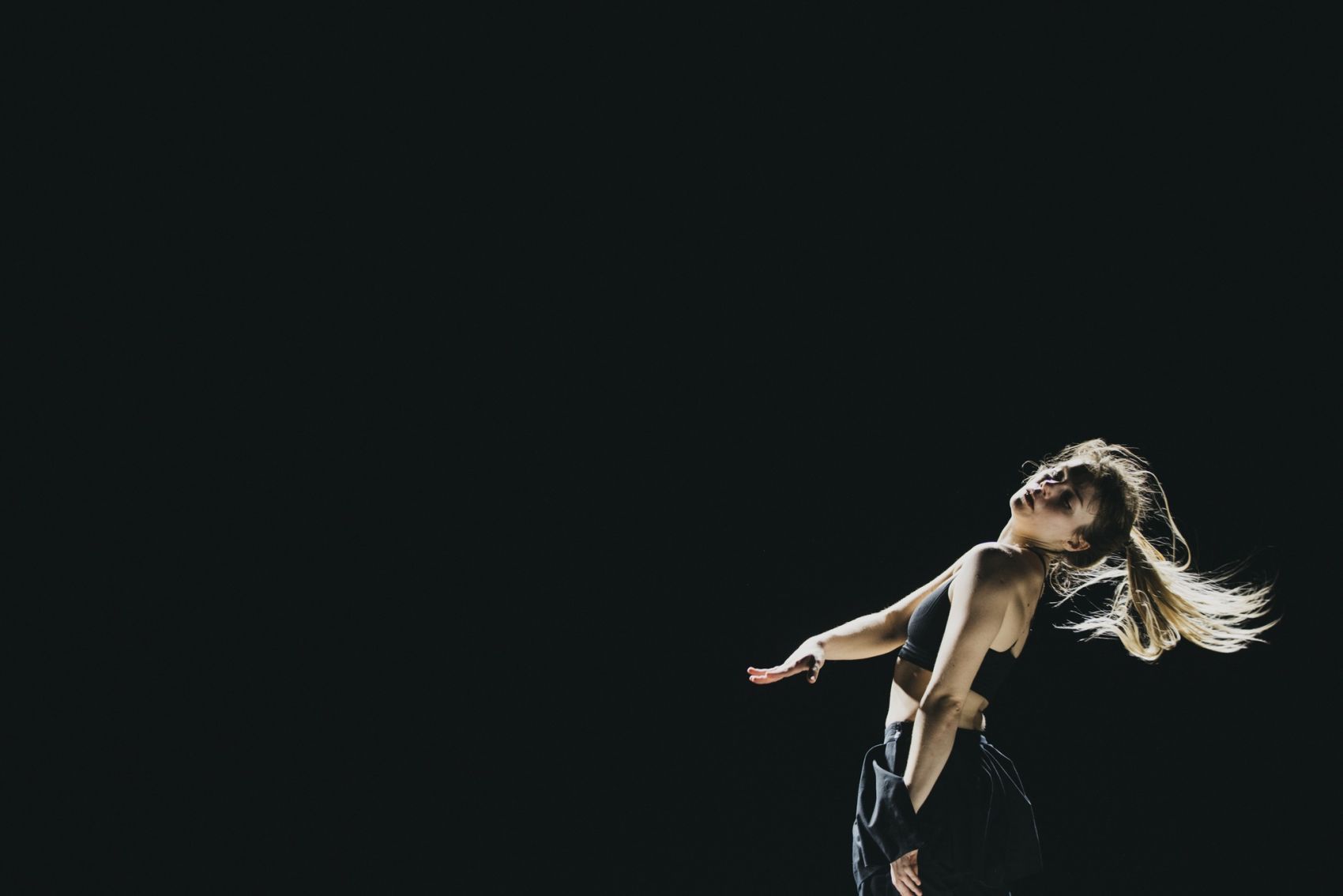
Krakow Dance Theatre – Treatise by Milan Tomášik. Photo by Grzesiek Mart.
This ambitious approach results in an aesthetic form, however, following the score inevitably leads to repetition and, at times, the emptying of the form. Through the performance, it becomes evident that while visual art, music, and dance are profoundly connected, their structures and rhythms do not always align seamlessly. The piece highlights how each medium operates within its own distinct framework, sometimes complementing one another and at other times creating contrasts that challenge conventional expectations of harmony between them.
Despite these shifts in alignment, Tomášik’s creative endeavor not only pays homage to Cardew’s work, but it also highlights the structural and rhythmic differences between visual art, music, and dance, this way it ultimately offers a fresh perspective on their interplay. The creators offer the audiences a new way of experimenting with the connection between visual cues and physical movement. The audience, in fact, becomes another player in this intricate game between the score, music, and dance. While they do not directly manipulate the visual or musical elements, their perception, interpretation, and reactions actively shape the dynamics of the performance. The open composition and the ambiguity of symbols allow viewers to infuse the experience with their own associations and meanings, making them not just passive observers but, in a way, co-creators. The meaning is ultimately born in the viewer, leaving room for multiple interpretations within the audience. This performative interaction adds another layer to the piece, transforming it from a fixed artwork into a living, ever-evolving experience. Having Cornelius Cardew’s graphic score, Treatise at the root of both the music and movement, gives a strong base for the performance, but its personalised interpretation goes beyond the presentation: it stands as a testament to the innovative potential of contemporary dance. By transforming abstract visual art into a living, breathing performance, Milan Tomášik and the Krakow Dance Theatre have created a work that is both intellectually stimulating and emotionally resonant.
This text was written by Kata Demeter during the dance critics residency at the Drugajanje Festival in Slovenia in November 2024, as part of the Beyond Front@: Bridging Periphery project.

